
Preview of Unseen Wrath
Prologue
Junction Cavern, near the Aedon Dwarven City of Adyrnaarn.
Two miles beneath the surface, deep in the Kaskev Mountains.
By the Dwarven Calendar, 122nd day of the 10,484th Year.
By the Human Calendar, Twosday (second day of the week), first week of Darri (fifth month of the year), 794.
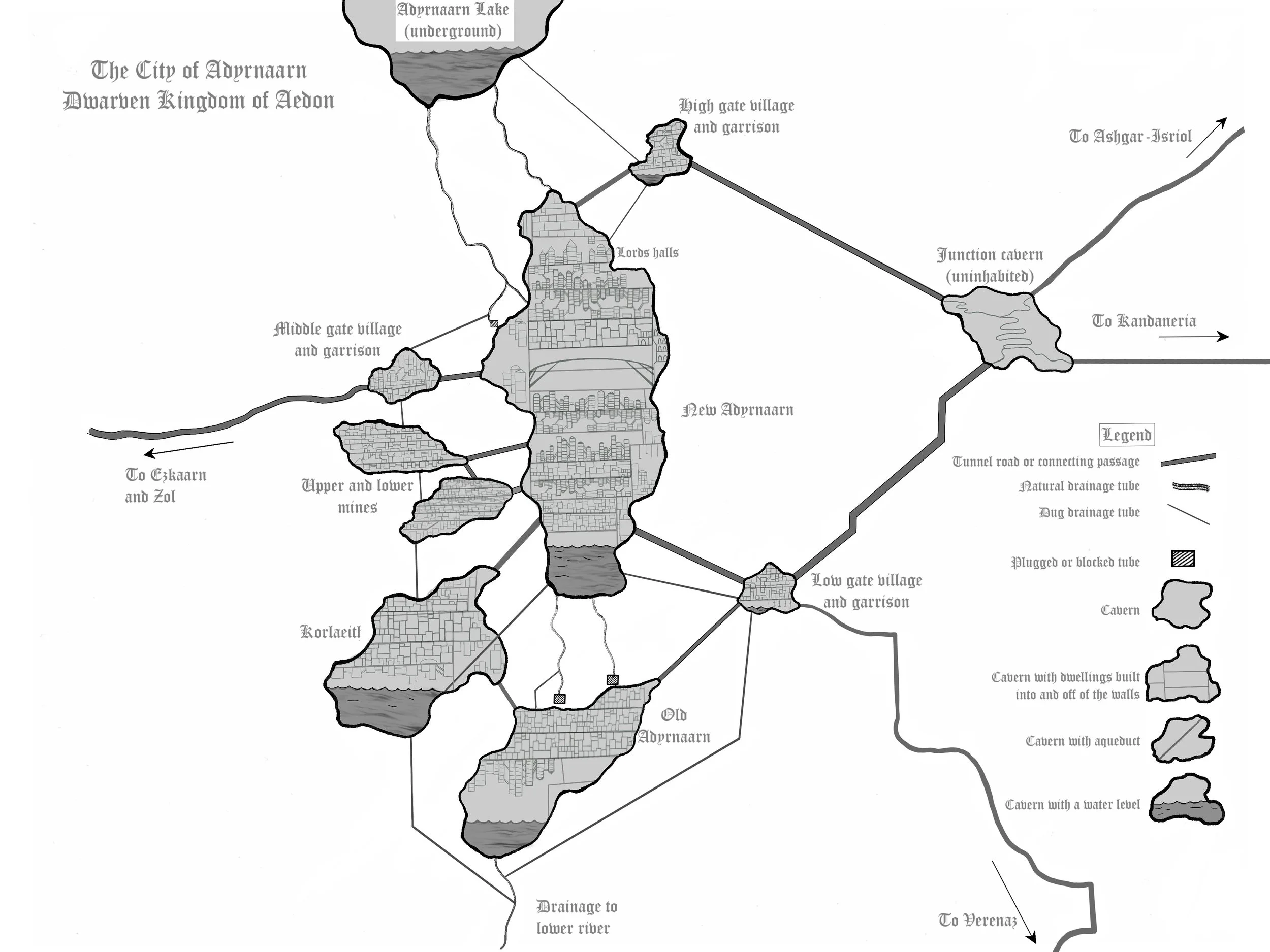
The columns of dwarves marched forth from the mouth of the road tunnel and into the cavern, passing Gudreka, as the strength of Drenia’s legions coiled into it.
“Gudreka!”
Gudreka internally shuddered. He knew that voice. He knew exactly from whom it was coming. He knew exactly what that person wanted. And he knew exactly the conversation he was about to have. And yet, he was bound by duty. The rising officer moved back into the broad mouth of the tunnel road, towards the voice that would not wait.
“Yes, Lord Therog, my general,” Gudreka answered his commander.
“There you are, Mud-Vein. Have the pioneers mark the encampment,” General Therog barked.
“Yes, my general.” Gudreka bowed with suppressed resentment. Gudreka already had the pioneers laying down the markings, posting sentries, scouting further ahead, starting the cookfires, and handling a litany of other tasks necessary to move an army.
“And post sentries! Even a mud-vein like you should have thought of that! Why do I have to tell you everything?” Therog stalked past.
“Yes, my general.” Gudreka remained bowed until he passed from Therog’s immediate presence, before trotting off to the side under the pretense of accomplishing tasks that had already been done. He grumbled to himself darkly. I have a bad feeling about all o’ this. The ceiling of the large cavern soared overhead, slashed with striations of hard rock. The walls were dry and there were spikes from the ceiling reaching to the floor, where water had dripped over millennia and built up minerals. The tunnel’s mouth entered the cavern near the floor, and an additional passage was built up to the entrance of a higher road tunnelling into the cavern. That would be the road to Ashgar-Isriol.
Gudreka closed his eyes. He could hear Therog’s voice pounding in his head, demanding that his legions be the ones to smash the gates of Ashgar-Isriol; nevermind that the king desired control of Adyrnaarn as a route to Ezkaarn and Zol. The king wanted to cripple the scheming Aedons for invading Drenia while Drenia was fighting to regain what the Medrians had stolen from them a hundred floods ago.
Therog was single-mindedly intent on impressing the king so that he would be showered in praises, titles, and lavish rewards, which was not a particularly strange goal for any of the generals in King Nerim’s grand army. The problem with Therog was his method, which was to achieve things that were not asked of him. Gudreka supposed that it might make sense to Therog in his own head, if Therog assumed that he would also accomplish what was asked of him, namely the conquest of Adyrnaarn, Ezkaarn, and Zol, and to prepare for other legions to march through and conquer a weakened Aedon.
How did I find myself with this idiot? Gudreka asked himself as he moved about the growing camp and supervised the Dwarven captains settling their companies in the places marked for them by the pioneers. But he knew that answer. He knew it well.
No one could say when this all started. A bit more than two flood seasons ago, mayhaps? King Nerim had sent a bundle of decrees fluttering off of his desk and across Drenia. He reminded us all of what we had lost. What was taken. What was owed.
Gudreka remembered some of those times, himself. While not old for a dwarf, Gudreka was not young, either. Having one hundred twenty-three flood seasons in his time, the dwarf recalled all too well the sprawling mines and furnaces of Mezar Rin and Rael Dol-Buen. He remembered when Drenia lost them to floods, and those thieving Medrians came with false kindness to buy the value of gold with handfuls of copper. Soon after, the Medrians built Ren-Gol and the other new border towns.
Even before the orcs took Ikria, the throne did nothing, the highborn did nothing, and Drenia was left to soak in its shame as even orcs spat upon her. Gudreka had nearly cried in relief when the levies came. Finally, he remembered thinking to himself, recollecting the joy he felt as the forges were called upon to stop and hear the king’s decree. The quotas were filled entirely by volunteers, and the recruiters had to turn many back. ‘Someone had to run the forges and farm the mushrooms and the hogs,’ the highborn had said.
Well before the next flood, Drenia had marched into Ren-Gol only to be surprised. It was not only the Medrians that cheated. They had conspired with Aedon and Dranomar. As Drenia reached to take back its rightful possession, the thieves of Aedon and Dranomar pressed on Kerolus and Grednir itself.
‘Better to take on all the thieves at once,’ the highborn had said, but Gudreka knew what this really was. This was just like a knife fight behind a drink hall: when three come at you, the only way to win is to fight harder, cut deeper, show no mercy, and make no mistakes. The king raised more legions and Gudreka marched out of Medria and into Aedon. It was not until the king’s legions had broken the gates of Kandaneria and several of Gudreka’s superiors had died to serious injury that he was promoted directly under General Therog.
After his promotion, Gudreka had written to his wife in Goroboln. She was overjoyed, and had written back of how enthusiastically she had been bragging that her husband was a major captain under a general, and of what a fortunate chance it would be for them. What a chance, he chuckled bitterly. What chance?
“Major Captain?”
Gudreka roused himself from his bleak reverie to face one of his senior scouts, a younger dwarf with a beard that strained to reach below his neck. The barely-scruffed soldier wore light armor of boiled hog and orc hides, and boots made of the same. His steel-spined crossbow creaked on its leather sling, hanging over his shoulder.
“Ah, Rangli. Report.”
“Thank you, Major Captain. It is as you said. No water here,” said Rangli.
“Eh, that’s fine, it is; what about the banners on the gate?” asked Gudreka.
Rangli shifted uneasily. “There were a few, but there was one with a downward axe on it.”
Gudreka’s eyebrows crept up his forehead. “The King of Aedon, is it?” Rangli nodded. Gudreka exhaled through his mustache. What a chance…
“Is the banner on both gates?” Gudreka asked. He had to be sure.
“That it is, Major Captain,” Rangli responded.
“Right. Go on, then. Fetch me the quartermaster and the master engineer. We’ll have to fix the water problem ‘afore setting into the siege.” Gudreka unconsciously cast his gaze to the far end of the cavern, toward the tunnels’ ramps to the upper and lower gates of Adyrnaarn.
“Yes, Major Captain.”
Rangli moved off to find the two officials while Gudreka approached the tunnel gates. The scouts had already cleared out the sentries from the Adyrnaarn guard, but there was no real hope of surprise in any case. By now, the Adyrnaarnans would have known about the Drenian legions’ approach for several days. Without water, the siege camp would have to catch water at the last stream, two days’ march to the rear and move it up… I wonder if we could be puttin’ them in the same problem. Hm. Gudreka looked over the rock striations canopied on the ceiling.
Gudreka was yet again roused from his contemplation as the quartermaster and the engineer found him. He gave instructions to the quartermaster to begin shuttling the water. For the engineer, Gudreka directed him to devise plans for digging to the Adyrnaarn water source and plans for constructing a crude aqueduct to the stream, to determine which method would be more efficient. Gudreka had formed the basis of a plan to break the gates of Adyrnaarn, but it required time.
Time to get the ugly business on, he thought after dismissing the other two dwarves. He scanned the area and found General Therog’s banner marking his location: a red banner hanging downward, with the embroidery in the middle of three gold medallions arranged into a triangle. Gudreka moved towards the banner, neither rushing nor dragging his feet. The cynical dwarf knew the impending conversation would be important. And difficult.
The general’s guards and Gudreka nodded to each other as he passed. He found his general lounging on a metal chair that folded upon its hinges for travel. A silver goblet of mushroom brandy dangled between his jeweled fingers as he was doted upon by the interloping prostitutes he had hired as his servants. All of the dwarves had to leave their wives, wenches, and strumpets behind when they volunteered, save Therog, the only soldier of Drenia here with women.
“Ah, there y’are Mud-Vein. Took you a bit, eh?” Therog laughed.
“My General,” Gudreka bowed.
“Out with it, Mud-Vein! Where are those scouts?”
“They’ve returned. They ran off the sentries. Adyrnaarn knows we’re here, my general,” Gudreka said, dropping to one knee and planting his fist on the ground.
“Good an’ well. Maybe if ye’d been artful on it, we’d have those sentries in hand and them none the wiser,” Therog scolded.
Until Adyrnaarn changed out the sentries in a day or two, Gudreka noted silently. But there was no point in arguing. Gudreka knew his general knew that. It was about–
“What’s the hold up on the siege?” Therog asked, swirling his brandy. “And get up.”
“Water, my general. I’ve tasked the quartermaster with setting up a relay for water from the last stream, and the engineer to give a choice on how to get water closer.” Gudreka rose as he answered.
“Hm.” Therog found something interesting in the depths of his goblet and eyed it thoughtfully. “What banners did the scouts see? What’s the senior one?”
“The King’s banner, my general,” Gudreka said, as his eyes drifted up the skirts of Therog’s serving women.
“The King’s!?” Therog lurched forward in his chair, and his goblet clanged to the ground in his surprise. “With the axe? What’re we waiting for? I want those rams up now and assembled!”
This was precisely the direction Gudreka had feared the conversation would take.
“My general, going at the gates right on… it outs the boys in a bad way. We can get the city in a better way if we tunnel–”
“Tunnel!? That’ll take until the next flood!” Therog bolted to his feet and leaned towards Gudreka as he bellowed. “No! Rams up now, Mud-Vein! Get those rams up before the water!”
“My general.” Another voice approached. It was Therog’s war wizard, Aemzon. Aemzon was an older dwarf with a fine lizard-hide coat inlaid with silver in blocky patterns. He was fully bald and his charcoal-grey beard dangled to his belt. The very bottom of the beard had a faint brownish tinge. “Listen to Gudreka, eh?” He walked with a pained but well-worn limp as the guards admitted him. “Think on the tunnel, eh? It’ll save a lot o’ the boys.”
“Save the boys? What’re we supposed to be doin’ here? The Aedon king’s right there! King Naurom’s right on the other side o’ that gate! You want us to dig a tunnel?” Therog demanded.
“The king won’t leave his people, my general,” Gudreka said.
“Nor will they be leavin’ him! Bust the gate, we fight the city, their king, and the king’s chosen. Dig the tunnel an’ we fight that an’ whatever legions show up, too. Dig a tunnel an’ we give time to the Aedons to raise more legions and move ‘em,” Therog challenged.
Dig a tunnel and save lives while Kurelig gets to Ezkaarn first, eh? That’s what this is about, ain’t it, ya turd skid? Gudreka glowered as he drew a deep breath. “Very well, my general. We will bring down the High Gate and flush them out.”
“And the Low Gate, Mud-Vein.” Therog poked Gudreka in the chest with a thick finger.
“… We’ll be losin’ a lot of boys goin’ through two kill boxes, my general,” Gudreka said levelly.
“An’ what’re we supposed to be doin’, Mud-Vein? You’re bein’ so kind to the boys, maybe you want to be their woman and serve them brandy and other things, eh?” Therog barked, spit flecking Gudreka’s face.
“Eh, my general, maybe I could be makin’ a stone creature with a scroll. That’ll help the boys get through the kill box and crack the gate. I could maybe make two of ‘em?” Aemzon suggested.
Therog’s body and head reeled over toward Aemzon. “I say ‘no tunnel, it takes too long’ and you say ‘how’s about something else that takes a long time?’ What do you two not understand?” Therog demanded incredulously. “How’s about you,” he snapped, pointing at Aemzon, “go figure out what you can do to help the rams crack the gates?” He stabbed a finger back at Gudreka. “And you–how’s about you get those rams up, eh?” Therog looked between the two of them as they both avoided his gaze. “Right, then GET OUT,” he bellowed. Aemzon scurried away, still limping. Gudreka left at his deliberately measured pace. He heard Therog’s voice recede behind him.“Girl! Come here an’ sit.”
Typical, eh? Gudreka glowered and then sighed. “Rangli?” Gudreka called. The fatigue was pouring into him suddenly. “Rangli?” he called again.
“Uh, yes, major captain?” Rangli answered after a bit of searching in the camp.
“Go and fetch me the quartermaster and the engineer again. New plan. Need the rams up first,” Gudreka said.
“Uh, yes, major captain, but what about the water?” Rangli asked, his feet shifting in uncertainty.
“Rangli. Just go and get them, eh?”
***
At the entrance to the kill box cavern outside the High Gate of the Dwarven City of Adyrnaarn.
By the Dwarven Calendar, 130th day of the 10,484th Year.
By the Human Calendar, Restday (tenth day of the week), first week of Darri, 794.
Another loud clang echoed in the tunnel, and another inward dimple appeared on the broad, thick shield mounted to the front of the ram frame. The ram was made from a huge, hollowed bronze tube, filled with lead and capped with steel, suspended from chains inside the frame of steel and mounted on spoked bronze wheels. These dwarves had been pushing this ram up the slope of the tunnel road for three days bombarded by the great siege crossbows guarding the gates, hurling their long bolts of steel, but the worst was yet to come.
“Push, boys!” Gudreka bellowed over his shoulder, and scanned the scene through the narrow slit in his shield. “Almost there, boys! They can’t stop us now!”
CLANG.
That one hit the shield right by Gudreka’s head. His ears rang after the echo subsided. “Push!” His ears still ringing, he could barely hear the grind of the wheels of the ram frame on the tunnel’s stone floor. Through the metal-on-stone grinding, the faint sweep of the oil brush on the bottom of the front of the frame made scuffing sounds with each push. He could not hear the grating and jingle of the chains as the body of the ram bounced in its frame.
They were about to push the ram into the cavern by the High Gate. As with any city, the approach to the gate would be overlooked by numerous vantage points, allowing the defenders to shoot their crossbows at the ram crew from all sides. The crewed siege crossbow would continue to bombard them all the way up to the gate. The shield mounted onto the ram was barely enough for the attacks from the front, and worse yet, the sides were unarmored in order to keep the ram frame light enough to travel the great distance it had come and had yet to go. More armor on the sides now was not a possible solution the way it might have been for the other crews going on a downward slope who were advancing on the lower gate.
“Put the stop on, boys! Fresh crew! Double crew! We need to push fast. Hear? Ready with the shieldbearers,” Gudreka shouted. That was the answer. Push the ram through as fast as they could and take the losses. Ranks of shieldbearers followed the ram and would chase the ram crew, trying to protect them from flank shots. Gudreka wiped away the sweat from stinging his eyes as the crew of exhausted dwarves let two additional crews take the load of the ram. Gudreka looked over them. He guessed that most were barely over forty floods old, their beards short and untouched by grey hairs.
“Right, boys. This is it! We’re gonna push this ram and make it rumble like the deep stones. We’re gonna break this here gate! And we’re gonna bring honor upon ourselves, eh?” Gudreka called to them. They panted from the exertion of taking over the ram. They were rested, but by no means were they fresh. They had been on the same grueling push over the last three days, and that was after the march here from fighting in Kandaneria. But he could see the light in their eyes. The fervor. They would return Drenia to glory. They had the will to fight. They were young, and the young were always the most eager to fight.
“Ready, boys? Ready.” Gudreka watched their faces harden as they steeled themselves. “GO!”
The dwarves gritted and braced their bodies and pushed with their collective might. Gudreka pushed against the frame as well. The ram frame slowly lurched into a faster motion up the slope. The air cleared slightly as the frame pushed past the mouth of the gate cavern. The kill box. A fresh breath was all they got, before the air was thick the acrid smell of oil on the ground, the buzzing, pinging, and clanging of the crossbow bolts surrounding them. The defenders were shooting at them from the sides and the ram crew could do nothing but take them at this vulnerable part of the approach. This was the price of making the ram lighter. Gudreka felt the air sear past him from a crossbow bolt and jerked to the side, stumbling, as another glanced off the edge of his plate pauldron. Some of the ram crew were lucky like Gudreka, others not so lucky.
Yelps of surprise and howls of pain sounded behind him. The hurried shuffle of the feet of replacement dwarves blended in with the steady clop of the remaining crew. The shieldbearers squeezed between the ram frame and the tunnel wall, out into the kill box cavern. Their broad, tall steel shields dragged and skipped on the ground as they rushed to their task. The shieldbearers on the left moved faster than those on the right, and crossbows of the High Gate of Adyrnaarn claimed some of their numbers as they rushed into position. The Adyrnaarnan defenders on the right shot at the Drenian crew, some bolts missing the crew and finding the backs of the shieldbearers on the opposite side of the ram frame.
The wounded and dead lay on the ground as the remaining crew barreled the frame through them, stepping over their fellows feebly reaching for rescue. The crew and shieldbearers that rolled on the ground, crying out in pain, were soon silenced by the defenders, sprouting a bolt or two from each of their bellies as if they were dirt mounds spawning metal mushrooms.
“PUSH, BOYS!” Gudreka’s legs burned in the push as the frame creaked forward. More shieldbearers moved forward and the ram’s crew was mostly protected. The defenders’ bolts sounded against the tall shields like sharp fragments of rocks bursting from heat. The crew pushed and strained as the ram crawled across the cavern floor towards the steel doors to Upper Adyrnaarn. Maybe it was for a few minutes. Maybe it was for a few hours. Gudreka could not tell how long, but it seemed an eternity, where his boys sweated and died while that buffoon Therog sat in safety, running greasy hands over his filthy whores.
TANG.
Gudreka’s world flashed white and spun as he slammed to the ground. Just when the ringing was almost done, eh? He could not hear anything at first. His vision was blurry as he crawled to his hands and knees. Slowly the blur of voices surfaced. It was not the first time the Gudreka had taken a blow to the head, but it was always a hard hit when a bolt slammed into one’s helmet. Gudreka was glad the helmet was still there. The pain in his head warred with his concentration and he knew his neck would be dreadfully sore in a bit. If I can manage to live through this.
“RIGHT BOYS! PUSH!” Gudreka felt the vibrations in his throat more than he could actually hear himself over the ring or distinguish any individual sound over the muffled, distorted cacophony of dwarves’ shouting voices and metal striking metal. He squinted through the small aperture in the front shield plate of the ram frame. They were almost to the gate, now. He chanced a glance over his shoulders. Hardly any of the original crew remained on the ram frame. The rest were replacements and he could see the unmoving silhouettes of bodies in the trail behind the ram frame.
“PUSH, BOYS! A LITTLE MORE!” Gudreka called. Light caught the corner of his eye. His gaze darted to it. The cavern was lit by flaming braziers, but this was a new light. A light in the stone slits that the defending crossbows shot from. Gudreka closed his eyes as more lights appeared in other slits. This is when they bring the fire. They must’ve wanted to beat us before this. Or maybe, this is where they push back the hardest.
“BURN ‘EM DOWN!” Gudreka heard one of the defenders shout from behind the wall. It was a woman’s voice. Before the war, Gudreka had heard that the Medrians and the Aedons gave weapons to their women, but he had not believed it until the first battles in Medria. Gudreka was initially troubled by cutting down women with his axe, but they fought, and so they also died.
Tiny flames leapt down to the ground of the cavern or pinged off of the ram frame. As the bolts landed, the ground steamed and smoked for a few breaths before flames leapt up and tore across the cavern floor. It was as if the ground came alive. The flames spread through the cavern. Smoke choked the air. The ram slowed a bit as its crew struggled for breath, but they were almost there.
Gudreka was thankful for the brush on the bottom of the front of the ram frame. Its stiff-bristled, wedge-shaped head scraped against the floor, pushing the oil off to the sides. Gudreka and the engineer had insisted upon this improvement right before their march on Kandaneria–because the Medrians did the same thing with oil and fire, and the Drenians had lost a lot of good boys from being burnt to death. The thin slick of oil that remained smoked, but Dwarven feet stamped out the flames as they pushed on.
No good for the shieldbearers, though. Their boots were soaked in the oil and readily lit when the fire came to greet them.Their tall shields tilted and wetly flopped into the flaming oil as they thrashed about, screaming as they burned. One by one, they would slip, falling into the burning oil, rolling and writhing as the fire ate them alive. The sole blessing bestowed upon these unlucky victims was the fire of their own immolation made it too bright for the enemies’ crossbows to accurately aim.
The ram frame had made it, finally, to the last few paces before the doors of the High Gate of Adyrnaarn. Gudreka’s throat vibrated. “STAND CLEAR!” He was not certain whether his crew could hear him, but they turned their gazes. He snatched a hammer from one of the surviving crew behind him, as another one of the forward crew members drew one from his own belt loop. They hammered at the retaining pegs for the forward shield. They were close enough to the enemy’s gate that the defenders’ great siege crossbows could not mark them, and the other crossbows from the side slots had shots on them from the flanks, not the front.
The first pair of pegs came out and in a desperate frenzy, they hammered at the remaining two before casting the hammers aside, lost in the inferno surrounding them, and pushed the plate. The plate, once free of its retaining pegs, rested atop two small shelves on each of the front legs of the frame. Once it began to tip, its momentum carried itself, thudding down into the burning oil slick. Burning globules of hot oil sprayed in the air, coating Gudreka and the other crew members. The other hammerman hollered, clawing at his face and stumbling blindly into the fire screen. Gudreka grimaced and tried to ignore him–and all the other torment raging around him–as he kicked the oil brush off the frame before throwing his shoulder against one of its legs.
“LAST BITS, BOYS,” he hollered as the frame once again skidded into motion. His men strained and grunted as the brightness of the flames and acrid smoke concealed them against the defenders. Gudreka and the remaining crew heaved and pressed until the ram frame thudded against the door.
“MORE CREW,” he shouted back towards the cavern opening. He had enough of a team to move the ram for the moment, but he knew that they would not last much longer. They were exhausted and some would still be taken by the crossbows. Gudreka wanted fresh men at the ready for when the gate cracked.
“ALRIGHT, BOYS, GRAB IT. ONE. TWO. THREE. PULL!” Gudreka and the rest of the crew grabbed the handles or the chain shackles on the ram’s massive bronze body and collectively pulled back on his command.
“PUSH!” Gudreka shouted and the group pushed the ram ahead from its back position. Most of the ram’s power was in its weight, though, which swung on the chains and slammed into the doors of the gate. It was the first sound that Gudreka was sure he actually heard since taking the bolt in the helmet, though he felt it too. The stone underfoot shook with the vibration, and dust swirled off of the door.
“GRAB IT. ONE. TWO. THREE. PULL!” The crew repeated the drill and on Gudreka’s command, again slammed the ram into the doors. Over and over, they pulled the ram back and heaved it forward, offering their paltry support to the mammoth weight of the ram’s own inertia. They gasped from the exertion. The metal of the High Gate strained and screeched like a dying beast of the deep. Sweat mixed with the soot to form a greasy, ashen mud caking their faces and sliding down their bodies.
“PUSH!” Gudreka bellowed. A thunderous twang echoed as the warping metal snapped and gave way. They had slain the spirit of the High Gate. Or rather, half of it. One of the doors slammed against the interior wall of the gatehouse and fell off of its hinges, shaking the ground with another resounding clang. Beyond it was the secondary interior gatehouse and a secondary gate. Overhead were murder holes for the defenders to rain all kinds of unpleasantness upon their invaders. Gudreka braced himself for more death to stare at.
“PUSH, BOYS! ONE MORE GATE AND YOU TAKE THEIR WOMEN!” The men cheered behind Gudreka as they pushed the ram frame into the gatehouse. The frame had a roof of steel sheets, but they were thin. Large rocks and crossbow bolts pinged in the frey, making divots or perforating the metal covering. Some penetrated the roof and clanged off of helmets or pierced the mail on the necks and shoulders of his men.
“PUSH!” They repeated the drill, drawing the ram back and casting it forward again. The inner gate whined in agony as Gudreka heard the thick patter of liquid hitting the roof of the ram and pouring off of the sides, dripping through the holes made by the bolts.
“MORE OIL! PUSH BOYS! THEY’RE GONNA TRY AND BURN US AGAIN! PUSH IF YA WANT THOSE TASTY TREATS ON THE OTHER SIDE!” They pushed once more, but light flared around them before they could pull the ram body back again. Hollers and screams of men burning alive sounded behind him as the ram shed the strength of so many men at once. It weakly nudged the gate, slightly torn ajar.
Curses! Gudreka looked back. There were more men rushing into the gatehouse, but he needed their strength to fight what laid ahead on the other side of the gate, not to spend it on the ram. The men whose strength should have been spent on the ram were being devoured by the hungry fire. Gudreka coughed and choked on the smoke before blowing it out through his mustache.
“LET’S GO, BOYS,” he shouted. This was the best way, because it was the only way. Hustling past the capped head of the ram and pulling his fighting axe free of its belt loop, he forced himself through the gap between the breaking point of the doors. Two more hits and the gate would be done, he lamented.
Spears immediately demanded his lifeblood as they coursed for his neck and face. Sweeping them aside with a reflexive whirl of his axe, he pushed the spear shafts up and kicked one of the onrushing defenders, while fresh men squeezed through the gap behind him. The first two gave their lifeblood to the indignant spears of Adyrnaarn, but more followed them. Gudreka fought for his life for innumerable heartbeats, barely keeping speartips and axe blades off of him, sometimes slapping them aside with a gauntlet. But as more men entered through the gates, they took the fight from him.
Gudreka stepped back and bent over, heaving for breath. The air inside the upper gate garrison cavern was much clearer since there was no open fire trying to claim anyone here. He was vaguely aware of the rush of more dwarves surging through the gap in the gate, others prying the remainder of the intact gate open. The light of the fire from the gatehouse and the kill box cavern washed over him and danced in the shadows of more men flooding into the High Gate. Soon the twang of defending crossbows ceased as the Drenian soldiers silenced those who had been feasting on Gudreka’s flanks for so long.
He pushed himself off of his knees and rose to his feet. “FORWARD, MEN!” Gudreka walked with less urgency now–the worst was over. There was yet a great deal to do, but they were inside the High Gate, his main force was flooding into the garrison, and the defenders would not be able to tell that the push on the lower gate was a ruse.
He stopped in his tracks as he saw a pair of his men pulling one of the defenders down and stripping off their armor. He already knew the situation before he came upon them. One soldier was pinning down the defender while the other one was working on his trouser belt. Gudreka kicked over the man working on his belt.
“OI!” the belted man angrily yelled before realizing it was Gudreka. “Oh, Major Captain, eh?”
“FUN LATER. FIGHT NOW,” Gudreka shouted firmly.
“Eh, boss, it’s just a snack to keep us going,” the other protested while the defending soldier, a Dwarven woman, writhed and screamed curses at them in her native Aedon tongue. Gudreka drove the spike on the butt end of his axe shaft through the ribs under her collarbone. The surprised light in her eyes died.
“OI!” The other man leapt back from holding her down. Gudreka wielded the axe menacingly at the belted man and then slew it over to skim the other man’s face.
“Fight now. Fun later,” he repeated. This time, he did not shout, but was unwavering. The two men gulped. “Aye, major captain,” they said.
***
Upper levels of New Adyrnaarn
Hrene grabbed a young dwarf newly draped in the Adyrnaarn livery. “You! Report to the major captain that the garrison is lost to the Drenians.”
He gawked at her wide-eyed, “But–but–” he stuttered.
“Captain,” she corrected.
“Captain–cap–c–” he stuttered more.
“Captain Hrene,” she supplied, gripping him with her gaze and staring into his eyes with pointed intent. She spoke loudly and slowly. “I need you to tell Major Captain Havrali that Captain Hrene says that the Drenians are inside the city. We have lost the upper garrison completely and they are coming into the city. Do you understand?”
The young dwarf gaped at her for a breath and she was about to shake him again when he nodded and scampered off towards the closest stairway.
Hrene climbed the steps to one of the halls on this level, to see out over the heads of her soldiers as they clamored into their positions near the mouth of the tunnel to the High Gate. Stone walkways hugged the perimeter of the cylindrical cavern that was the largest space of Adyrnaarn. Water fell from a hole in the ceiling and fell the length of the cavern to supply the reservoir at the base of the city. More water trickled in from a smaller stream a few levels beneath them, creating a gentler waterfall over the section of the city that housed the lords’ halls. The lights of the city glistened off of the falling water, making it sparkle.
The soldiers formed ranks across the entirety of the walkways framing either side of the tunnel’s large opening. On the upper floors and balconies of this level and further parts of the walkways, she had positioned her crossbows so as to strike the invaders from all sides as soon as they tried their way into the city proper. How could we have given them the upper garrison so easily? She chastised herself internally.
“Alright, you broad axes and bright spears!” Hrene’s voice carried over their heads and echoed off of the ceiling of the cavern. Some heads turned towards her, but most remained fixed on where the enemy would emerge.
“This scum’s the worst of all Dwarvenkind. They take children as slaves, turn proud women to whores, and throw the men to the mines alongside their goblin slaves an’ work them to death! YOU’RE the bulwark. YOU’RE what keeps their base kind at bay. YOU’RE the King’s shield! No matter how many o’ that filth come through that tunnel, you give ‘em a chop in the throat or a poke in the eye an’ let the ranks behind them see what we’ve got for ‘em. When there’s too many o’ them dead on the ground, give ‘em a toss over the side.”
They all had a grimness about them and there were no cheers. They knew that many of their company were about to die.
“They have no golems wit’ ‘em,” Hrene continued. “They puttin’ nothing but flesh forward here. Give ‘em enough pain an’ they’ll fold.”
A loud, metallic clunk echoed from up the tunnel. That sounds like… Hrene’s thoughts were interrupted by a blur of motion smashing into the ranks at the tunnel mouth, sending the bodies of six of her dwarves spinning over the side of the walkway, plunging into the depths of the city. Some of them screamed as they fell, though one of them fell soundlessly, a large steel bolt impaling his body as he plummeted down.
They’re using our own siege crossbows from the gate, Hrene realized. “CLEAR THE TUNNEL PASSAGE!” She tried to contend with the cacophonous panic, as soldiers were already already scrambling away from the entrance to the city, pushing back against the ranks that had formed behind them. The Drenian soldiers came after that and fought a bloody stalemate for what seemed an eternity. The wounded and dead from both defenders and aggressors piled upon the walkways and pooled over the railings. The upper levels had already been evacuated and everyone that could bear an axe or a spear pressed into arms, but a seemingly unending stream of Drenians kept coming. Adyrnaarn was not a big city, and it seemed the Drenians had brought enough to pay in blood for all of them.
And they’ve got a wizard, Hrene remembered from one of the briefings from the days before the Drenians broke the upper gate. One of the king’s spies had gotten a message through before the Drenians arrived. They had a wizard and it was only a question of when the Drenians would put him forward. What kind o’ person is that? she wondered. Spying was widely considered a dishonest and dishonorable profession, yet Hrene was thankful for every bit of information that had been provided before the Drenians closed off the upper and lower gates. An’ that’s another thing. The Drenians were still pressing on the lower gate and they could put all of the King’s Legion against the High Gate in case they broke the lower gate.
Hrene had come with the king’s own legion to reinforce the homeguard of Adyrnaarn and, the king had hoped, throw the Drenians back at the gate, break their momentum and drive them back through Kandaneria. But there’re so many o’ them… for all o’ the spies the King had, big still beats small. ‘Specially when they haven’t shown their wizard yet.
The Adyrnaarnan defense concentrated around the Great Stair, a spiral staircase, smooth ramps, and a central shaft normally utilized as a cargo hoist that connected most of the levels together. There were secondary entrances encircling the periphery of Adyrnaarn, but they were small and could each be held by fewer numbers. Bit by bit, the defenders of Adyrnaarn, homeguard and the King’s Legion alike, ceded their ground until the Drenians controlled the upper levels of the main city; enough so that they wheeled down the siege crossbows from the upper gate and began bombarding the defenders, forcing them to give further ground.
They were losing another level, suffering losses at every level where the entrance to the Great Stair could be seen and angled by the siege crossbows on the higher levels, when the stuttering young dwarf from hours before, his scant beard struggling to break through the skin of his face ran up, stumbling to a stop and panting for breath.
“What?” Hrene demanded irritably. The boy-dwarf held up a rolled scroll for Hrene, leaning on a knee with his other hand. Hrene took the scroll and unrolled it. Finally, she grumbled. She shoved the scroll back at him. “You tell them not to wait. We’ll be getting’ out o’ the way when they come.”
The boy-dwarf ran off, squeezing his way through the defenders and down the Great Stair to deliver Hrene’s reply. Hrene and her soldiers were too many levels below the top for the stolen siege crossbows to bombard them, and so they could openly fight on the stairs. But because Aedon fought openly there, so did Drenia, and right then, the line was buckling at the left flank. Two, three ranks were folding, dead and dying laying at the feet of the Drenians as the invaders started to press the king’s soldiers on two sides.
“C’mon!” Hrene strapped her shield to her arm and snatched her battle axe out of the loop as she ran, grasping her shield in her other hand. She always had a few soldiers reserved out of the line for just this kind of thing. Tried and tested veterans. Their feet pounded on the paving stones, plates clanging against the rustling jingle of the mail, felt more in their bodies than heard over the din of fighting.
Hrene’s first overhand strike took a Drenian soldier by surprise. His spear was mid-thrust over the shoulder of another Drenian. Hrene’s axe blade forcefully met the vulnerable gap between his pauldron and helmet. The blade did not break the mail, but it jolted him to the ground. She raised her shield in time as a Drenian axe blade skittered off of it. Adyrnaarnan soldiers surged behind her and crashed into the other Drenians as she stepped on the weapon arm of the foe she had lain prone and drove the top spike into his open-faced helmet.
He feebly clutched at the axehead as she pressed it in. He shuddered and twitched as she pulled the spike out. The soldier fell limp, but she had already moved on in the space of two breaths, driving the butt spike of the axe between the plates of the Drenian axeman who had been protecting the spearbearer she just killed. The spike passed between the plates and parted some of the rings of his mail. The spike did not drive deep, but the axebearer still fell, and her soldiers finished him off.
Holding her shield high, her shoulder tensed and she felt a pop in the joint as the axe squarely rang on her shield. Sweeping widely with the hook-end of her axe blade, it passed through the air until she hit the ankle of another Drenian soldier. Pulling hard, she brought him down and used the momentum to swing the hook-end around and bury it in the Drenian’s chest. The outrage of being killed by a woman showed on his face as he lost the strength to hold up his head.
“Captain! The golems!”
“Finally,” Hrene impatiently called back, in the midst of beating back the Drenians and restoring the right flank. Then to her soldiers in front of her, “Make a hole! Golems! Make a hole!”
The rear ranks looked back to share witness with her. Four massive bodies, sharing Dwarven proportions but three times the mass, and made from stone and clay, climbed the stairs in great, lumbering strides. Two robed dwarves trailed them, shouting at the blocky creatures and waving their arms as they scurried about. These would be the King’s Wizard and the Wizard of Adyrnaarn. Hrene had never met Adyrnaarn’s wizard and never gotten to know the King’s Wizard. There had been no need. I’ll buy them both drinks everyday for the next three floods if they can pull this out of the fire, Hrene vowed to herself as she shouted for the soldiers to clear a path.
The Drenian’s frenzied pace paused as the golems entered their view. The front ranks of Aedon soldiers had not yet parted when the first golem reached over their heads with a huge hand of living stone and grabbed one of the Drenian soldiers. Its enormous hand easily enveloped the armored, thick-bellied soldier, raised the feebly flailing invader over its head, and smashed him to the ground still encased within his closed fist. Blood and bile squirted from the lump of flesh hanging in the golem’s hand before it through the heap of gore into the ranks of the Drenians. Aedon’s ranks parted and the other three golems joined the first, crushing, smashing, picking up Drenians and using them as weapons against the other Drenians or throwing them off of the walkway to plummet to the bottom of the city cavern. Aedon soldiers followed and mopped up the flanks, eliminating and finishing off the surviving pockets of Drenians that the golems swept past.
As quickly as they had lost them, the King’s Legion was regaining the levels forfeit to their invaders. After retaking a fourth level, the siege crossbows the Drenians had taken from the High Gate could manage the angle, and began bombarding the golems, and the Aedon soldiers with them. One of the constructed giants took several direct hits, with one long steel bolt lodged in its torso, the other two hits taking one of its arms. Despite this, the soldiers of Aedon, the two wizards, and their golems were able to fight past the entrances to the Great Stair on each level and managed to lose only a few soldiers to the siege crossbows on each floor.
The golems mauled and crushed the enemy in their march up the Great Stair. The two wizards drove the golems, and Hrene’s soldiers hurried to keep pace, protecting the wizards from the few bypassed Drenians. Hrene looked down at the remains of a Drenian as she kept order behind her soldiers. The bloody ruin of a Drenian oozed down the stairs. One of the golems had stepped on him. The legs and one arm were the only pieces easily recognizable; his other arm, head, and body were mashed together with bits of crushed metal and garments in a wet pulp that someone would have to clean later.
Hrene grimaced. They were nearly where they had been only hours earlier: three levels below the top of the cavern. The golems were making great progress, but it was merely a dent in the Drenians’ numbers. What was actually important was luring out the Drenian wizard. Ruin enough of their gains to force him to commit. Once they could flush him into the open, the two Aedon wizards could crush him and then commence grinding up the remaining Drenians.
Flying rock fragments pelted against the walls, sprinkling Hrene and her company with dust and sharp stones. Shielding her eyes, she peered back towards the Great Stair to see the two wizards arguing. Three of the four golems were continuing past this level’s entrance to the Great Stair, but the fourth golem had broken into pieces from the assault of the siege crossbows of the higher levels. A pair of tenuously attached legs stumbled amok, seeking footing to continue its march. Hrene could not hear what the wizards were arguing about over the sound of the fighting and shouting of hundreds of dwarves and the rampaging golems, but one of them seemed like he had made up his mind about something.
No, no, nono, “No! NononoNONONO!” Hrene tried to make him hear over the noise once she realized what he was doing. She watched him produce a wand from the folds of his robe. Energy crackled around the tip, forming into a fiery bead. The bead grew into a ball and shot upward, growing in size and brightness. The flaming ball shot past the siege crossbows, impacting explosively on the wall behind them. Mangled wrecks of the siege crossbows, mangled bodies of the Drenians, and bits of shattered masonry quietly fell from the great height to the echoing sound of the boom.
“Now ya’ve gone and done it!” Hrene shouted at him, but her protestations were drowned out by the answering impact. Dust, shouting, and blood everywhere. Hrene could not see clearly.
“Fight on! Keep ‘em on the run and throw ‘em out of the gate!” Hrene shouted and took the line herself amid the confusion. This was the opposite of what was planned. The golems were supposed to make the enemy wizard show himself, so our wizards could crush him. The smoke and dust cleared only slightly as she fought alongside her soldiers, hacking at silhouettes in the dusty haze that shouted with different accents. Sure enough, she saw the corpse of one of the wizards, half of his face charred away, his two golems standing dumbly with no one to drive them. The other wizard sheltered in the arch of the Great Stair, peering around nervously. Hrene fought on with her soldiers and the other two golems. They were moving towards the broad spiral, when a light flashed behind her and she heard a thunderous crack.
Looking over her shoulder, she saw one of the golems still standing dumbly. The other one was a smoldering pile of stone and baked clay. As she was turning back, a searing light burned a line in the edge of her vision as the Drenian wizard destroyed the other idle golem. The Aedon wizard, close behind Hrene, cursed at the enemy but his voice was drowned out by the din. This was Adyrnaarn’s wizard. She knew because she did not recognize him.
Aedon’s warriors reached the entrance to the next level from the Great Stair. The golems, oblivious to danger, continued to smash and drive through the Drenian ranks. They were breaking from a withdrawal into a rout, even with only two of them. Invincible titans against puny axes and spears. The Drenians ran, but the golems easily kept pace with them, crushing and maiming or hurling them to fall the screaming height of the cavern. Until they crested the archway of the entrance.
The golems moved ahead of the soldiers and the Aedon wizard. Another bright, searing light, and one of the golems exploded into a rain of rocks, pebbles, and burning clay. Hrene only heard a ringing. The rest of the world was muffled and so it barely registered as a sound when another bolt of energy destroyed the last golem. The soldiers of Aedon paused, as did the Drenians. The tide could go either way.
“Fight on!” Hrene cried. She could not hear herself over the ringing in her ears, but she pressed forward and her soldiers followed her. They pressed the Drenians past the archway and continued to drive their rout up the stairs. The Aedon wizard clung to the edge of the covering archway. Hrene was barely aware of him. She could not spare anything for him. She had to lead her soldiers with her own axe.
Scorching air and concussion knocked her forward onto the stairs. The helmet took much of the impact, but she could feel hot blood trickling down the side of her face. Hoisting herself to her feet, she spared a glance behind her. The Adyrnaarnan wizard and a dozen soldiers lay smoking and unmoving.
Oh, no… She stared at them wide-eyed for a moment. She shook herself and turned back to the only problem she could do anything about, but the tide was already turning. With no golems to crush them, the Drenians were realizing that they still had more soldiers on the field than all of Adyrnaarn and began to press them back downwards.
Hrene had no idea how long she fought, but she knew that the Drenians pushed her soldiers all the way back down. Time always passed surreally in long fights. She distantly puzzled as to why the Drenian wizard did not lay into them, having killed both of the wizards on her side. But, she and her soldiers were allowed to live, at least by him. The other Drenians, however, were eager to pay back the pain dealt to them by the golems. They took no prisoners, except for the women. Of the soldiers that got separated from the main line, they threw the men over the side. The soldier women were stripped bare and carried into one of the evacuated halls. Hrene bit back bitter tears as she fought and commanded her soldiers, their numbers now ever so precious, as she did her best to withdraw them to the lower levels.
They fought down to another level on the Great Stair when Drenians poured in from that level and began rolling up the flanks of Hrene’s soldiers. They must have finally gotten down one of the other stairs. Hrene’s force split. Most continued fighting a withdrawal down the Great Stair, but without their leader. Hrene and a hundred or so of her soldiers were pressed onto the walkway on this level. The Drenians pressed them from two sides, one coming down the Great Stair and through the archway, the other Drenians pressing her soldiers from one direction along the walkway. So, they continued their fighting withdrawal.
Hrene had hoped to reach another smaller stairway, but they were blocked from the other side and forced onto one of the many bridges that spanned the cavern. The bridge had made a quicker route across the cavern for merchants and officials that normally served its function well on this level. But for Hrene, it was certain death in front of her as the Drenians pressed her backward across the bridge, certain death from the fall on either side, and a glimmer of hope at possibly finding a stairway on the other side of the bridge before the Drenians came the long way around the cavern behind them.
The bridge was narrow and it gave some of her soldiers the chance to rest on their feet after fighting for hours. Hrene kept at the front. Her hearing had improved, but the ringing was still there. They were almost across the bridge and it looked like the Drenians were not going to cut them off at the rear. Just have to deal with the ones in front then, she resolutely grumbled. Her soldiers were getting onto the main walkway on the perimeter of the other side of the cavern when the bridge shook with a blurred motion from below. Another blur and the bridge shook again. Hrene staggered, as did her soldiers and the Drenians.
“They’re bombardin’ the bridge from below! Keep ‘em on the bridge!” she hollered. Hrene’s soldiers fought backwards to the mouth of the bridge, perpetually shaking from the large bolts of the great siege crossbows from below, still controlled by Aedon crews. The Drenians sneers turned into desperate snarls, ferociously trying to fight their way onto the perimeter avenue and save themselves.
A bolt thumped the bottom of the bridge. A chunk of masonry broke off. That was all it took. The bridge needed its integrity to bear its own weight. A chunk of that size, half of the width of the walkway, and it crumbled. Large sections broke off and plunged into the abyss. The Drenians scurried. Enough of them had scampered back to the side they started on, but not all of them–scores of invaders hurtled to the depths as the collapsing bridge gave way.
The ground gave way under Hrene, as the mouth of the bridge fell in on itself. Two soldiers fell with her. Her own fighters grasped to save them, catching Hrene and one of the soldiers. She met the eyes of the soldier that fell. He looked back at her as he plummeted, face was grim, but without regret. She wanted to reach for him, but he was already too far and her soldiers hoisted her up. She had lost her axe and shield, but was handed a readily available replacement axe from one of their fallen.
She heaved a heavy sigh. “Let’s find us another stair.”
***
Roughly one hour later
Two levels below the Middle Gate of Adyrnaarn
Hrene and two other soldiers burst out of the entrance to the minor stairs, alert and weapons readied. Echoes of the fighting thundered above them.
“Why here, Captain?” one of the soldiers asked anxiously.
“Dreadful close to whining, there!” she scolded, “but here’s the rally area that was in the major captain’s instructions. Now get the rest of the boys down here.” Her shoulders and knees ached, but she stood upright and proud for her soldiers. Their wills wore thin and would wear thinner before the end. That be where it’s headed. The end. She thought bleakly. Those buffoons, the two doddering wizards, bumbled their last chance to throw the Drenians out of the city.
Hrene’s remaining soldiers piled out of the stairway. About a hundred of them. Most of her soldiers would still be fighting in the Great Stair, but they were separated. Hrene’s best hope was to reunite with them at the rally area or fight for their relief. But to what end? She stood rigidly by the arch to the minor stair. No matter how much internal effort she was exerting to remain vigilant, her soldiers saw her standing straight, and in turn straightened themselves as they passed by her. She waited for them to file out completely.
“Last one,” said a dwarf woman from behind a closed helmet with a recent dent decorating its visor.
“Good. Form a column,” Hrene commanded. “We’ll not be walkin’ back a mess. Show ‘em we’re still gonna fight, eh?”
The soldiers meandered at the base of the stairs wearily, but a bark from one of Hrene’s few remaining sergeants put a bit of mettle back into their march.
“Fine, then,” Hrene muttered to herself and moved off over the bridge spanning the cavern on this level. It was wider than the bridge off of which they had fought on the higher levels. The column should be able to march across with five soldiers shoulder-to-shoulder. She heard the sound of the column marching behind her, sluggish footsteps. Soldiers on the march would often sing, but in their current circumstances, they were unable to muster the hope to do so.
“Sing To the King’s End,” she called over her shoulder.
There was an exhausted silence behind her, only the clopping boots on the cobbling of the bridge.
“You heard the captain! Eh? You filthy worms better make ‘er proud!” yelled the sergeant.
“What. Does. The King. Say?” The sergeant punctuated the words with each step, timing them so the other soldiers could mark their step off of his.
“The King. Says. The orcs. Came. Today,” sounded the soldiers in response. Echoes of the fighting sounded from above. Now and then, falling bodies of warriors plummeted past them, having fallen from the higher levels. Some of the bodies struck the bridge and bounced off, leaving gory splats on the stone masonry.
“And. What. Does. The King. Do?”
“The King. Fights. He kills. With axe. And spear. He fights. With. His own.”
“What. Does. The King. Need?”
“The brave. And. The strong. By. His side.”
“And where. Were you?”
“We were. There!” The soldiers cheered.
“Where?” the sergeant screamed at them. Hrene always liked this song, but found it bitterly ironic now.
“We were. There! Atop. A pile. Of broken. Bodies. Green. Skins. With. Dead eyes. And. More. To come!”
Hrene could hear them cheer on more, their spirit somewhat restored, but stopped listening. More bodies were falling, but they were not the bodies of soldiers and warriors laden in armor. They were children, elders, new mothers and fathers clutching their babes as they careened downwards. Hrene’s eyes went wide at the rain of her people.
She marshalled her face to calmness. That’s the way o’ it, she thought bleakly. Mass suicide of civilians was for when the savages broke the gates, when they were overrun by orcs, hobgoblins, goblins, ogres, trolls, and the like. Death was a better fate than the life of enslavement that otherwise awaited them. Guard the secrets of the craft, rather than let the beasts cut them out of you, or worse, force you to perform the miracles of Dwarven craft for your kinsmens’ butchers. It was long recorded in the histories that dwarves taken prisoner suffered horrific fates, being tortured to work, but those that had it worst were not tortured themselves. Dwarven families taken prisoner were compelled to work for the savages or bear watching their children be tortured and killed.
Better this way, but it was normally reserved for the filth. Not… not for other dwarves. But Hrene had already seen what the Drenians would do. Any other Aedon did not trust a Drenian for their word, and it was common knowledge that they kept slaves, but Hrene had seen with her own eyes the invaders stripping captured women soldiers and carrying them off.
Shaking the recently branded memory from her head, Hrene focused on the work in front of her: get these soldiers to the rally area and get them back into the fight. Her column marched into the marketplace on this level, cleared of the carts and stands. The marketplace was bustling with soldiers and messengers running about frantically. The taverns hummed with activity as the King’s Legion had taken over its kitchens to feed soldiers that were not fighting.
“Rest them here,” Hrene called to her sergeant and hurried off to find anyone that knew what was happening. Forcing her way through the crowd, she found the headquarters of Major Captain Turiotli and several of his clerks.
“Major Captain!” she called as she forced her way through the crowd.
Turiotli glanced up from a scroll he was reading as another messenger was talking to him in urgent tones. He held up a hand to silence the messenger. Sweat and nerves painted the messenger’s face.
“Hrene! You live!” A smile split his face of worn stone and bent his beard of wires.
“Major captain! I was separated from my main unit in the Great Stair. I–”
Turiotli held up his hand again, this time to pause Hrene. “I know. I had a report on it.”
“I have a hundred axes with me. We’re ready to rejoin the fight, captain,” Hrene said.
“You and yours need to be eatin’ before you’re goin’ anywhere,” Turiotli said.
“But, Captain–” she protested.
“No. Look,” he pointed. Hrene followed his direction and saw tired soldiers congregating in clumps around the marketplace, sitting on barrels or merchant carts or on the ground. They drank soup from bowls or tore meat with their hands and teeth.
“Need to eat to fight. Who wants to die hungry anyways?” he chuckled. “Go and get them fed and come see me.”
Sour-faced, Hrene left the command post, found her sergeant, and pointed him towards the nearest tavern, directing him to feed the troops. She watched as the sergeant goaded the soldiers to their feet and marched them. She was almost back to Turiotli’s command post when her sergeant’s hand pulled on her shoulder through the crowd. She half-turned and looked in annoyance only to have dried meat and bread thrust at her.
“You need to eat, too, Captain. Can’t have ya fallin’ over in the middle of it,” he scolded her. Hrene took it sourly and turned back toward Turiotli’s command post.
“Ah, good. You ate, too,” he said. He glanced up anxiously at the higher levels.
“Where can we fight, Captain? Is my main unit still up there?” Hrene asked urgently.
“Chew your food, captain. Finish eating before you rush off to die again,” Turiotli said, wiping the sweat from his brow. His surcoat, emblazoned with the mark of the King’s Legion, was smeared with ash, mud, and ink; Hrene’s own surcoat was mainly colored with blood now. Hrene scowled as she bit off the end of bread that her sergeant had pressed upon her.
“It will be different for ya. King’s orders. You’re to take some soldiers and get the wounded and the gnomes out o’ here.” Turiotli’s head leaned forward to look her pointedly in the eye.
Hrene could not believe her ears. “And run from the fight?”
“King’s orders,” Turiotli said, trying to quiet her a bit.
“And is the King leaving this city!?” Hrene’s voice rose with outrage. “Where be the King?”
“The King fights in the Great Stair, Captain,” Turiotli said.
“Then I will go an’ fight there, too. Beside the King,” Hrene said and started to move off, but Turiotli yanked her back by the shoulder.
“You will not.” He pointed a low finger at her chin.
“But, you said the rest o’ mine are down here. I take ‘em back up and give it to the Drennies,” Hrene said.
“No, you don’ have anything besides those hundred over there,” Turiotli said. “Ya’ve been relieved o’ them.”
“Relieved!?” The words slapped Hrene. How? What did I…?
“King’s orders,” Turiotli said.
Hrene looked around the floor. “What… what–have I angered the King?”
“No. Th’ opposite,” Turiotli said solemnly.
“THEN WHY!” Hrene shrieked in anger, blinking back tears. “Why does the King shame me? Spurnin’ me at the last?”
Turiotli took a breath. “The King trusts you to do the job. He needs the wounded out of here. He needs the gnomes out of here. An’ the siege crossbows on the Middle Gate do no good here anymore. Ezkaarn and Zol are next in Drenia’s path, so take the crossbows there, tell them how the Drenians came at us, and fight with them.”
They argued a bit more, but the king’s orders determined the outcome. Numbly, she shuffled her feet through the crowd back to her soldiers.
“Sergeant Marchag,” she mumbled, her voice lost in the bleak energy of her surroundings. She lifted her voice and called again as she came nearer. “Sergeant Marchag.”
“Captain? Have we orders?” her sergeant bounded to his feet.
“That we do, sergeant. Get them ready. I’ve bad news to bear,” Hrene said.
Sergeant Marchag guffawed. “Bad news, eh? Worse than this?”
Hrene nodded solemnly, “Worse it is. These orders, I mean.”
Chapter 1
Upper levels of the Korlaeith district of Adyrnaarn.
By the Dwarven Calendar, 124th day of the 10,484th Year.
By the Human Calendar, Thirstday (fourth day of the week), first week of Darri, 794.
Gudreka grimly watched another slew of families jump to their deaths, plunging from the middle levels of Korlaeith into the dark reservoir at the bottom of the cavern. These Aedons were curious to him. In Drenia, suicide to avoid capture was only when defense against the savages, orcs, goblins–that kind–was principally to prevent invaders from torturing craft secrets out of prisoners. Gudreka was surprised when the first families jumped, and was even more astonished that it did not stop. Gudreka had a nagging feeling that Drenia had underestimated the fighting spirit of Aedon. But today! Today the day is won, he shrugged to himself.
“Rangli!” Gudreka called, raising his voice to boom over the sounds of lingering fighting.
“Major Captain! On the way!” Rangli’s answer faintly sounded. Moments later, Rangli loped towards him, flecked in blood all over to match his commanding officer. “Yes, Captain.”
“Tell the minor captains that they’re on their own authority to finish up here an’ bring me the trophy. After that, you can help yourself to the prisoners,” Gudreka instructed.
“Yes, Major Captain.” Rangli trotted back from where he came to carry out his orders.
Gudreka had been delaying this, ironically taking refuge in combat rather than face the task that lay ahead. He knew Therog was furious at Aemzon’s intervention, but it was also very clear to him that Therog would have denied Aemzon’s intervention had he been asked. Ah, well. It ain’t wine. It ain’t gonna taste better with age.
***
Therog’s command post, Lord’s Halls of Adyrnaarn
“That wasn’t your place, either!” Therog bellowed, spilling wine from his cup.
“And what was your place, general? Eh? During all the fighting? With your men doing men’s work, or laying under a whore all the while the boys of Drenia be bleedin’ dry and getting’ smushed by Aedon’s golems,” Aemzon retorted, his tenor raising to match Therog’s in volume.“An’ what was the purpose do ya suppose the King had when he sent me with ya?” Aemzon continued, raging. “Do ya think the King’s like, ‘ah, that boy-o there, Therog, needs someone to paint his whore’s nails. Better send him a wizard!’ Certainly not to save the blood of Drenia, eh?”
“Oh, inpretin’ the King’s will is one o’ your skills, now, is it?” Therog retorted.
“High Captain Gudreka,” the guard announced. A stony-faced Gudreka entered. He was stained in dried blood and bore a cloth bag over his shoulder, its bottom caked in dark mud.
“Oh, just in time, Gudreka! Maybe you’ve got an eye for the King’s will, too, eh?” Therog baited.
“The fight’s about done, General. Korlaeith’s done,” Gudreka said. Aemzon could tell he was spending a lot of effort to keep his voice measured and his face calm. Aemzon knew that Gudreka hated Therog, as deeply as he himself did.
“That’s good an’ all, but how do ya answer for this?” Therog jabbed a finger towards Aemzon.
“How do ya mean, general?” Gudreka asked evenly.
“Oh, don’ play stupid. Aemzon interfered with the fightin’ and took the glory away from the boys!” Therog rounded on Gudreka.
“As he did, the Aedons were goin’ to push us all the way back to the High Gate, if he didn’t,” Gudreka said.
“Ah, so ya asked him ta–” Therog hissed.
“The good captain did nothin’ o’ the sort. I took it upon myself to fight. An’ they had two wizards that woulda burned the boys to ashes, too,” Aemzon talked over Therog.
“Ah, so good thing, that I only be needin’ to throw one o’ ya in shackles for disobedience. I get the relief of the other bein’ thrown in chains for incompetence at not bein’ able to crush the Aedons an’ their small garrison. How about–” Therog spat at Aemzon, but cut off as a large object thunked on the floor wetly and rolled at the edge of Aemzon’s vision.
They both jumped. A bloody head rolled on the floor and came to a stop between them. Its eyes stared up at Therog.
“King Naurom of Aedon,” Gudreka said.
Therog stared at the head for a moment before shaking himself, “if ya think this changes things, you’d be makin’ a mistake. You’re on thin tolerances, Major Captain!”
“Ya’ve orders, General?” Gudreka asked in a neutral tone, not having moved from where he stood.
Therog glared balefully at Gudreka before he spoke his next words. “You’re to get the boys ready for Ashgar Isriol and be sendin’ scouts to Ezkaarn. An’ no mistakes at Ashgar Isriol,” Therog warned. “We’re to make good time and break the gates of Ezkaarn before Kurelig is done with Zol. Understand?”
“I understand your orders, General,” Gudreka said.
“An’ you!” Therog stabbed a finger back at Aemzon, “since you’re so understandin’ o’ the King’s will an’ takin’ care o’ things, you’re goin’ to… fix the plumbin’… yeah, here in the Lord’s Halls first.” Therog smirked to himself self-satisfiedly.
“The plumbin’, general?” Aemzon said dumbly.
“Yeah, the plumbin’. Work your magicks, master wizard. Begone,” he waved them away. Turning and sloshing his wine a bit more he lumbered to the back of the hall. Aemzon knew he was going to the bedchamber to lay with his whores some more and shook his head in disapproval. Never had he seen a general so unwilling to fill his station. He was so intently focused on his loathing, his face contorted into a glower, that he jumped in surprise when Gudreka nudged him.
“We should be goin’, Master Aemzon,” Gudreka said. Aemzon nodded and they both left, quietly passing the guard. The guard nodded ever so slightly to both of them.
“The plumbin’,” Aemzon blustered in outrage when they were at the Great Stair.
Gudreka heaved a sigh and looked over at Aemzon, “whether you agree with the general’s priority or not, the plumbin’ does need to be addressed to bring this place back into use. I can’t say anything for your decision to fight, but I know ya killed two wizards and I know the boys are mighty grateful. They might give ya some o’ the women if you went by the taverns at the Middle Gate,” Gudreka suggested. Aemzon stopped walking and Gudreka took a few more steps before stopping and turning back.
“You’re a good man, Gudreka,” Aemzon said earnestly. The two parted company without a further word. Aemzon found his way back to his own hastily furbished dwelling. The soldiers in the headquarters detachment had delivered Aemzon’s trunks of books into another chamber of the Lord’s Halls.
“Leave me. Take your meals and find your women.” He waved off the staff. The young soldiers smiled and thanked him as they left, but Aemzon was only listening for the receding sounds of their footsteps.
Aemzon pulled a chair up to a table next to his trunk of books, “Ryn. It’s safe.”
A pinprick appeared in the air in front of him and slid, forming a line before splitting and making a hole in the air. A tiny red face peered through before equally minute red, clawed hands wrapped around the edges of the opening in space and spread it further. A miniature, slender woman, red-skinned with wings and horns, no larger than one of the wizard’s fingers, crept through and stood on the table in front of him. Aemzon gave her a tired smile and affectionately stroked her lithe body with his finger.
“I dunno if I can keep servin’ the King’s will under this idiot, Ryn,” Aemzon said glumly.
“I see how hard you work, Master. I see your brilliance and your cunning,” she kissed his fingertip.
“I love ya, Ryn,” Aemzon said, emotion filling his voice. “I’m glad we made that contract all those years ago.”
Chapter 2
A small hamlet south-west of the town of Serna, west of the town of Keppa.
By the Human Calendar, Twosday, first week of Darri, 794.
An overcast, humid midsummer day.
“We have enough problems without your like coming here,” snapped the headman.
Julian took a long, deep breath. “I understand this is hard, Headman Oris, but the Lord Serna needs your support–”
“Look here, young man! We’ve already had conscription patrols from Keppa, from Garber, and Yvel itself! And now, you’re coming here for more!? None of those patrols, and definitely not you, even bothered to keep those scoundrel bandits away when they came through last week!”
“Bandits?” Julian muttered to himself curiously.
“Master headman, we’re not here for conscription,” Liri began in a conciliatory tone, “we’re looking for–”
“I DON’T CARE! Get off with you! Out!” the headman insisted.
“–volunteers,” Liri finished.
“You don’t understand? Get out. Get. Out. There’s no one left to conscript. ‘Volunteer.’ Whatever you want to call it. Look around.” The headman gestured to the small hamlet. Liri and Julian stood on the tiny patch of grass that passed as a village green, though with only six houses around it, the hamlet hardly needed anything larger. The houses were made of clay and straw daubed on frames of wooden planks and sticks, with larger timbers bearing most of the weight. The roofs were thatched except for one, presumably the headman’s house, which sported a tile roof. Proof to the headman’s point, Julian could only see very young children and oldsters minding the work and keeping the village operating. He could see three farm houses in the distance around the hamlet, but only one of the fields showed signs of activity. This is going to be a very rough winter, he thought bleakly.
“You’ve made your point,” Julian said, turning to mount Pine, his chestnut roan mare.
Liri was mounting her own horse when the headman called after them. “This is your own fault for bringing the war here in the first place, Serna!” Julian’s head hung, staring at the ground as he absently guided Pine out of the nameless hamlet.
Liri caught up to him a moment later. “You ready to go back?”
“Yeah,” he answered blandly. They rode on in silence for a few miles, no sound but the wind occasionally rustling the leaves and the clop of the horse hooves on the hard-packed dirt road. The air was brisk and smelled clean.
“Are you going to take Sir Merik’s offer?” Liri said abruptly. Julian was quiet. More than a minute passed in silence. “Julian?” she asked again.
“Nah,” he said, wiping sweat from his brow.
They rode further in silence for a while until Liri spoke again. “So you’re staying?” Again, Julian was silent. “Julian!”
“Huh? Yeah. Staying.”
“So? What is it?”
“What’s what?”
“Listen. I don’t have time–none of us have time–for your mopey scat. We’ve a job to do.”
“Right, tenleader,” Julian murmured dejectedly, “whatever’s needed.”
The pair plodded along to the northeast, towards Serna and Keppa, for a few hours in silence until the next tiny village came into view. It was quiet. Julian sat up in the saddle, suddenly alert. Very quiet. He and Liri came to a halt, surveying the area. The nearest house was four hundred or so paces away, but they would have still been able to see movement or maybe hear something. Nothing. Julian looked to Liri and she motioned for him to circle left, to the north around the settlement. Julian walked Pine on, skirting the houses, quietly picked their way through the fields.
And he saw them. Three, at first. People dead in the fields. Slashed or bludgeoned. A few with arrows in them. He cautiously continued, seeing them, mostly in groups of two, three, or four, the closer he came to the village. He counted twenty-seven in all. He joined a grim-faced Liri on the far side of the village. She nodded to him and they walked their horses through the center, seeing more bodies. They exchanged a glance before turning their horses out of town. “They didn’t burn anything down this time,” she commented.
They were most of the way out until Julian noticed Liri staring at something. He followed her gaze. He had to squint for a moment, but saw it too. Movement in one of the buildings. He looked at her and she nodded. He dismounted and drew his hand axe from a loop on his belt and crept towards the house. It was a small cottage with mud and timber walls and a thatched roof, like most modest houses situated in rural Yvel. Julian crept in through the open doorway. A few bolts of fabric lay scattered and unrolled on the floor, some torn or unfinished garments, and an overturned cabinet of thread spools marked this a tailor or seamstress’ house. He looked around. He was sure that he had seen something. And then he did. A pair of eyes–two pairs of eyes–three pairs of eyes–fearfully staring at him, hidden in the piles of fabric with a broken chair on top. They did not look like orc eyes.
“It’s fine. I’m not here to hurt you,” Julian reassured them. He slowly put the axe back in its loop and held his hands open and in front of him. One of the small figures shuffled. Then another. All three of them revealed themselves slowly, with two additional figures coming out of hiding from under the straw-mattress bed.
There were two children, both boys, and three adults; two women and a man. “Who are you?” asked one of them. He spoke in Eklendan, an adult male with a characteristically Eklendan narrow jaw and red hair.
“My name is Julian. I am from Serna. It’s not safe for you folk here. Come back with us. We’ll take you to Serna where you’ll be protected.” Julian’s Eklendan was stilted, but passable. He brought them out to Liri, who was holding an arrow she had collected. “What’s that?” Julian asked.
“I don’t recognize it. Maybe someone else does,” she said, stuffing it into one of the leather saddlebags. The villagers gathered their scant remaining belongings and joined Liri and Julian to travel back to Serna. The adults, Jana, Sontrin, and Molok, were tailors, but the children had been from other families. Julian was not sure, but they seemed like they were related, or at least very familiar with each other. Jana, her hair kissed by greys, seemed a bit older than the other two, though they were all in their thirties. She rubbed her hands often, though it seemed to stem more from shaken nerves than from pain. Sontrin was on edge the whole journey, looking over her shoulder and around the fields for threats to leap from the grass. Molok would engage in conversation but trail off at odd times, his eyes taking a far-off light to them.
“Greenskins, right?” Liri asked.
“What?” Sontrin jumped in surprise at Liri’s question, breaking the silence. “Oh. We didn’t see them,” she said. “They came at dusk and it was too fast.” They were quiet again for a while. “Do they really have green skin?”
“Yeah, lots” said Julian, “but some have blue.”
It took three days to walk back to Serna with them, though they would have made it in less time had they been prepared to accommodate a larger party. Possessing more horses, or a cart and mule and supplies for five adults and two children, would expedite their journey, but they did not, so they had to forage, hunt, and lay snares overnight. A pair of rabbits and some wild chives and henbit fed them for the trip. Prey was starting to get scarce with the start of winter.
Julian and Liri had been out recruiting for the Serna Regiment with little luck. Maybe some of their new companions would join. Lodging would be difficult, but they could be put to work, either in the regiment or with their craft to supply the regiment. At least one would have to care for these children that were not even theirs.
At the end of the third day, the increasingly foreign sight of Julian and Liri’s home came into view. New buildings had sprouted up where the old had burnt down. They were all four-floor buildings, the fifth one nearing completion with four more to go. The ground floor was for craftsmen and shops, the upper floors housing apartments and barracks. The palisade, completed late in the summer, was now having a layer of stone sent by Prince Arnold laid with the much-appreciated help of engineers. Liri took the new arrivals into the quartermaster’s office while Julian waited outside with their horses. Liri came out a moment later and walked with Julian over to the training field.
The training field was at the base of the hill by the Covendran Manor. It had several archery targets set up, sparring dummies, and quintain. The young Serna Militia Company had reformed into the even younger First Company of the Serna Regiment, which was drilling on the practice field. Liri led them, walking towards Lady Judane, who, under the instruction of one of the elves, was practicing alone with her polehammer. Judane was the second child of House Covendran after her brother, Lord Dareum, who was probably out recruiting, since he would normally be put through the paces alongside his sister. Like him, Judane had fought and somehow survived the Battle of Serna Hills, picking up the polehammer she favored from a fallen soldier during one of the skirmishes of the battle. Julian thought the elf training Lady Judane was named Bierien, and was mildly surprised to see her out on the training fields. Normally, she spent her time training blacksmiths to be weaponsmiths and armorers.
Julian peeled off without Liri noticing, dropping Pine’s reins. Julian strode aggressively to put a stop to something as soon as he saw it.“Just what do you think you’re doing?” he demanded. A squad of soldiers stopped drilling.
The tenman, Baryn Kevr’ail, stared in surprise. “What?”
Julian roughly reached in, seized the shortest soldier, ripped off the leather-veiled helmet and cast the soldier on the ground.
“What the scat, Julian!” Ziek angrily yelled from the ground.
“You watch your mouth! You’re too young for this and you know it! Twelve years and a soldier!?”
“I’ll be thirteen in two months,” Ziek muttered as he stumbled upright.
“Julian,” Baryn stepped in calmly, but assertively. “It’s not up to you. The lad made his mark on the papers and it’s his choice. You know the greenskins don’t care how old they are.”
Julian looked past Baryn to Ziek, who was sheepishly averting his eyes. “A mark on the papers, Ziek? Or did you not mention that?” Julian asked.
Baryn slowly turned and looked at Ziek expectantly. “Well?” Ziek said nothing and turned further away.
“All right, boy, if you didn’t mark the papers then you’re not in the militia or regiment. Doff all that right there and be on,” Baryn patiently chided.
“Don’t see why everyone else gets to fight,” Ziek grumbled, as he removed his gambeson and thigh-length leather coat that reached to his calves and stormed off.
Julian watched him go and then stepped to follow, but a hand on his shoulder stopped him. It was Baryn. Tenman Baryn. “Don’t do that again, Julian. You have a problem, you bring it to me.”
“Right, tenleader,” Julian looked at the ground, feeling ashamed at his rudeness. He could not look Baryn in the eye. After all, the man had lost his own wife right before his eyes. Julian had no idea how he could still go on. Julian walked away only a few paces before he noticed that Liri was standing not far off, maybe thirty paces, holding the reins of her horse, with Lady Judane and Bierien. All three of them were looking at him and Liri had her ‘you-made-a-mess’ face with her hands on her hips. Great.
Liri walked towards him, leaving the other two to resume their training. “Save all of the Gersh, yet?” Liri asked sardonically, “or just the town?”
“The boy’s too young to soldier,” Julian muttered.
“Fine, but next time tell me and I’ll talk to the tenleader. I have to go apologize to Baryn now because, apparently, I’ve got a hot-tempered soldier of my own.”
“Sorry, Tenleader,” Julian said.
They walked in silence for a bit before Liri spoke again. “Are you going to your family’s farm?”
“No,” he said flatly. Why would they want that? Need another reminder of how Ervan’s dead? Julian thought for a moment of his late cousin, set to marry a woman named Terah here in town when the war started. Ervan was full of hot blood and they both went off to fight. Julian was supposed to look after Ervan. Temper that hot blood. It should’ve been me…
Liri glared at him from the corner of her eye, but remained silent as they walked. Julian was unsure where they were going, so he just kept pace with Liri and their horses. They passed through the busy town green, turned supply dump, bustling with evening activity. They passed the new multi-storied buildings. One featured a soup kitchen with a small counter for townsfolk to sit. It was run by an oldster, too old to fight, but not so old that he could not offer soldiers and workers some meat and vegetables in a warm broth to ward off the cold gusts of wind and the coming season. They passed Mkaela’s closed up bakery and another row of houses.
“Where are you going?” Liri asked.
“I was following you,” he said, confused.
She made a vexed sound. “Get your business together,” she huffed. “C’mon. Let’s get some soup.” They turned around and walked back. They tied the horses to a post and sat down at the soup counter. The old man nodded to both of them and started cutting thin slivers of meat from a rump on a cutting board next to a large pot of broth.
Julian laid head in his hands, covering his face while he waited. He could feel Liri’s irritated glare.
“Smell anything good in there?” piped a familiar voice. Julian looked to his other side.
“Garven!” Julian exclaimed. Garven, one of the huntsmen and trappers who was apprenticing under Korane before the war, and his Elven friend, Arynn, were seated at the counter. “What are you doing here? I thought you both went up to Borly.” He had a little bit of scruff coming in, though he was younger than Julian. About Ervan’s age. Julian did not know what to make of Garven’s silver-haired friend, Arynn. She wore her locks tied back in a cord to keep it out of her face. Like most of the other elves, Arynn kept her face calm, almost emotionless. But what Julian found most unnerving about Arynn was her golden eyes. When the sunlight shined at a certain angle, they almost seemed to glow.
“We’re done at Borly. We came back,” Arynn said. “We hear there’s a regiment forming,” she grinned.
“Anyone else come back?” Julian asked.
“Korane caught up with us on our way into town. She picked up some supplies. I don’t know what. She’s here for only a night and leaving tomorrow,” Garven said.
“Korane!? Where’s she going? Was she with you in Borly?” Julian asked excitedly. He did not know why, but Julian had not felt more lively in months. He struggled to understand what was so interesting about Korane. Maybe I’m just happy to see Garven?
“No, I don’t know where she was. I didn’t think to ask too much. She didn’t seem to want to talk much about it. She did have a prisoner, though,” Garven said.
“Yeah? What kind? She’d get the meanest ones and grind them up,” remarked Julian.
“Actually, she had a little goblin,” Arynn continued, “ and she hates the poor thing, too.”
“Poor thing!?” Julian said incredulously.
Arynn made a skeptical face, which was very expressive for any of the elves. “You did not see how she treated it.”
“What do you make of this?” Liri broke in, handing the arrow she took from the village over Julian and Garven to Arynn.
“Why do you ask?” she said.
“I showed it to Bierien and she told me what she thought, but said that I should ask another elf, or someone else well experienced, for another opinion,” Liri answered.
“That sounds like Bierien,” Arynn agreed. “Let me see.” She turned it over, checked the fletching and glue briefly, inspected the length of the shaft, but seemed to focus her attention on the shape of the arrowhead. It was fashioned with its single blade on one side, the other side being flush with the shaft. “Goblin,” she said slowly, “Northern Goblin, would be my best say. But, Irduin would be the best to ask, and she stayed at Borly.”
“Hm. Thanks,” Liri said” “Were there goblins at Borly?”
“Oh, yes, quite a few,” Arynn replied, “Never seen so many at once.” Arynn paused thoughtfully, “although, that is not unique to goblins. This journey has had a lot of first times.”
“Hm. Goblins all the way down here. Wonder where Korane’s going. We sure could use her,” Liri mused.
“That’s from around here? Where?” asked Garven.
“A village about fifty miles from here. Most of the villagers were dead. We found a few live ones and brought them here. They said that the raiders came at night and they couldn’t really see them.” Liri explained.
“We heard of things like that when we passed through Yvel,” Arynn said, “except that it was mostly merchant and supply caravans being raided on the roads further west.”
“Hm.” Liri said. “Wonder how they’re getting so far in.”
Wooden bowls gently thudded on the counter as the old man running the soup shop served them. Julian lost his thoughts for a moment with the company of his friend and the hearty smells of the steam wafting into his nose.
***
Ziek had heard everything he needed to. He slunk back in the shadows in the alley next to the soup counter and quietly backed down the alley until he emerged on the next street. He scuttled behind a cart and crossed the bustling, muddy street.
“Finished getting the eggs out of the coop, Ziek?” A voice that Ziek really did not want to hear. It belonged to Imick Rollodran. Since the early summer, when the orcs first came down from the mountains at the beginning of the war and Ziek’s family died, he and a few other children in his situation had been lodging under the care of other families around the town. Space inside the palisade was scarce with the growing numbers of farming families trying to move inside the wall, but they earned their keep with chores and work. And there was plenty of work to be done… it was simply that Ziek was not meant for chores and work. Ziek was meant for fighting and glory, and he knew where he was going to get it.
“Uh, yeah. I did,” he lied. She looked at him skeptically. “Uh, well,” he lamely stammered, “I might’ve dropped a couple of them,” he falsely admitted.
“Ah, I knew it,” she said, sure that she had caught him trying to pass off the mistake. “You’re sure to be cleaning that up.”
“Yes, mistress,” he said with well-feigned sullenness. She watched him go as he meandered in the direction of Imick’s family home, near all of the Rollodrans. The Rollodrans were one of the big clans in Serna; most people were either related to the Rollodrans by marriage of a cousin, or else had some old grievance with them. Often enough it was both. Conveniently, the chicken coop was on the far side of the house and he was able to walk past it, all eggs safely nestled where they had been laid, and out of the town. Ziek walked through the field of stumps. The forest line had been cleared back by the town after the first raid and they had used the timber for the construction of the palisade. It was a barren field for over two hundred paces. He crossed it in the best way to avoid questioning–as if he was meant to.
“What are you doing out here?” called another voice. Almost.
Ziek turned to see Sedra Torin’ail. “Uh, Auntie Imick sent me out here to gather chives,” he lied.
“Oh,” she said, satisfied. She had a basket of berries in hand, freshly picked. Short, like other Marins, and very lean, unlike some of the other Torin’ails, Sedra had a stern, grandmotherly air about her despite only being in her forties, abetted by streaks of grey coming into her hair. “There’s a patch I saw yesterday fifty paces in the trees that way,” she pointed. “Don’t stay out too late or the Bog Knight’ll get you.”
“Thanks!” Ziek said excitedly and ran off. The excitement was genuine, though not for the purpose Sedra would think. Ziek skipped into the woodline, passed the patch of chives fifty paces in and hooked to the left, toward the direction he had been heading before his second interruption. He steadily climbed up the hill through the trees. The needle trees pricked at him and the broadleaves, having lost most of their foliage by now, scratched at him, but he brushed them aside, stopping occasionally to flail a spider off of his sleeve or out of his hair.
He reached his destination just under a mile later. Sure enough, smoke billowed from the chimney of Korane’s cabin. The solitary house was built mostly from timbers, with red clay filling the gaps. It had two shuttered windows on each side. Ziek heard indistinct voices coming from the inside. He crept closer and could make out two different voices. One was probably Korane’s, but he could not recognize the words. They were neither Marin or Eklendan. Nothing like either language. The other voice was timid, hoarse, and slightly muffled. Creeping closer to peer between the cracks of one of the shudders, he adjusted a bit to see around the room. He could see a small figure, maybe his own size, tied to a chair with a bag over its head, but no one else. No Korane.
And then Korane’s hand was on his shoulder, spinning him around and thrusting him against the side of the house. She had always been a little scary, but it was worse now. There was something in that unwavering gaze of hers that forced his eyes to the ground. Her hair black like a hidden moon and tumbling like the waters of a river. She had a scar on her cheek that he did not remember. Ziek had a bit of an infatuation for the huntress and would sometimes daydream about her, even if she was older than the age that most women married. But, there was something different now. She had lost her husband and her son months ago when the orcs came. Now, she was leaner, but not gaunt: like unneeded things had been burned away or left behind. It felt like she did not blink. She stared at him, eyes boring into him, neither speaking a word.
At last, she broke the silence. “No. Go back.”
“But, I–”
“No,” she interrupted, “You do not want any part of this. You will need to trust me.”
“I just wanna–” he tried.
“No.”
He chanced an upwards glance. If iron could be carved, that would be her face. He looked down again. Reluctantly, he started to move back towards the town. He really did not want to deal with those stupid chickens and their scatty eggs.
***
Korane watched Ziek retreat back into the woods until his slight figure disappeared into the brush. She felt sadness for him with no one left to turn to and wanting to join the fight, but being too young to do anything besides get in the way. Well, she thought, there’s plenty someone his age can do to help. Just none of it’s fighting. She waited for him to be gone before heading back inside, wincing from a sudden pain in her leg where that cursed hobgoblin had slashed her months ago.
She took the bag off of her captive’s ugly little head and sat down at her small table and returned to slicing the meat from the carcasses of a tree rat and a fox that she had shot with her bow on the way back from her recent adventure.
She spoke in Marin. “Tell me how to say what just happened in your language.” Korane hated the little scatbag, but he was useful, at least for the time being. He was a lying coward, who had pretended to be utterly dumb to the Marin tongue. The beastly little savage had finally admitted it after several days of her abusing him for the crimes his kind had committed. She hated him for what he was and what he brought with him. But he was an oddity.
His surprising fluency in Marin came out when he started begging for mercy from her beatings in the language. He concocted an unlikely story that he used to be in a group of goblins that ‘traded’ with Markians, though in reality more likely raided Markian villages and took prisoners for slaves. But, he never resisted her, and promised to help in every way he could–not that his promises were worth much.
At first, Korane had taken to beating him daily, but she grew tired of it, and the delays made for slower travel. She realized that she was taking her other angers out on the creature, and decided that past the purpose of establishing dominance, it was a waste of effort. He was much like a wild dog that had been tamed.
The whole time since she had picked him up two weeks ago, she prodded him, when she was not beating him, for how to speak his filthy language. In the evenings, she learned their letters. She chuckled to herself bitterly. She never had a use for learning letters and only knew enough numbers and coins to sell meat and pelts. That she was learning Goblin letters before those of her own kind rankled her mightily.
“Do you want that instead of letters?” he asked.
“No. We do them both.”
“That will take most of the night.”
“That’s fine.”
“So, we are staying here?” he asked optimistically. The hope was very obvious in his voice. He was clearly tired.
“No. We still move at first light,” she said, plopping the meat into the stew pot along with some chives from a nearby patch and some roots and mushrooms. He groaned. This was the first roof over their heads for weeks and he was visibly exhausted from the pace that she set, just from the difference in stride. He was only a little more than half her height.
She slammed her fist down on the table and he jumped in fright. She gestured at him with the hunting knife. “No whining or you get less food.” He was silent and waited patiently. She scooped the stew into a bowl for herself and a mug for the little wretch, putting it down in front of him. She untied one of his hands so he could eat. They ate in silence.
Curiosity struck her at odd times and this was one of them. “How did you learn your letters, anyways?”
“I needed them for my function,” he said, greedily slurping the stew.
“What function?” she prodded.
“I was a mining engineer where I am from,” he said, “then Fndeyet answered the call and formed a fist of engineers.”
“Who’s Fndeyet?” she asked.
“Fndeyet? Fndeyet the Great is the eldest of the Talz clans of Berkasliryig,” he said.
“What’s Berkasliriyig?” she asked through a mouthful of the stew. The stew was the best meal they had had in the two weeks. She had not had rat before, but it had a tangy, gamey taste like most animals that find their own food. The fox meat, strangely, tasted a bit like mutton. The roots and mushrooms gave it an earthy taste and the chives added another tang complementing the rat meat.
“It is a city,” he said.
“A city? On the other Side of the Mountains?”
“No, on this side,” he said, “under it, really.”
“Under it? Further north? I’ve never heard of it.”
“It is within the Mountains.”
“In the mountains? I didn’t know there were humans that lived in the mountains,”
“No, it is a city of goblins, mostly.”
“What!?” Kovane was genuinely surprised. A whole city of these little scats?
“Mostly goblins. Plenty of others for trade. Sometimes that is where some of the humans come to trade,” he explained.
“… Is it far?”
“It is further than Kogylar, but we could probably see it before the end of the moon after this moon.” The goblin sounded like he was starting to regret his answers.
“Then we’ll go to Kogylar and see how far deep under the mountains we can go,” she said. He groaned again.
***
Deep under the mountains, on the road to Ikria.
By the Goblin Calendar, sometime in the Eighth Moon Cycle, 3114.
Oygariyet missed riding his wolf. At this moment in particular, he missed riding his wolf by the ache in his knees. The great one, his throbbing knees, and his Hobgoblin company wended their way along the road to the Place-called-Ikria, though to call this a road was a term of convenience. Really, it was a networked, winding labyrinth of caverns, tunnels, and dug passageways that had supported trade between the Place-called-Ikria, the Stone of Rykooth, and other places of the hobgoblins, goblins, or even orcs.
His company consisted of his honor guard of twenty seasoned Hobgoblin warriors, Zirn, the small orc named Grotis, his Fourth from his own staff, a motley collection of orcs and goblins, both warriors and slaves alike, including the sword dancer given to him by the Donbat-Karang, a few from his harem, and some humans for a special purpose. The slaves and some of the warriors took turns pulling the baggage wagons that held most of their supplies, tools, and spare weapons.
Despite the condition of the road, peppered with collapsed bridges over bottomless chasms, narrow ways, and the disintegration of the path in more open caverns such that it was difficult to determine which outlet was the true route to the Place-called-Ikria, the recurring dilemma of food and drink, it was the humans who proved to be the largest obstacle. Their inability to see in anything short of blistering light of the coward in the sky meant the troop had to keep torches lit, which created problems of fodder, and oil to burn, and choking on the smoke in smaller passageways.
Curse them, but this had better be worth it! Oygariyet grumbled.
“We should rest for the day, Great One,” Grotis said to him.
“How much further do you think?” he asked Grotis. Oygariyet noticed his Fourth’s ears perk up. He knew that she did not like to travel without a clear sense of the passing of nights. She kept a tally, but it was based on when they slept with no clear sign like the rise and fall of the moon.
“Another two moons, Great One,” Grotis said.
Oygariyet sighed. “Very well. Next large cavern will be our place for the rest. Water, if you can find it.”
Oygariyet was not sure if it took a few moments or an entire winter to reach the next large cavern, but he knew his feet ached for the entirety of the passage. Some of the slaves fell to the laborious task of foraging the bizarre, whorled trees that grew beneath the surface, all knots and bulbous growths that had to be cut into something resembling logs for burning. Sometime even later, they had a fire going. Slaves roasted some unlucky lizards over the fire while also setting pots of water to boil.
With the work of pitching the camp done, the honor guard posted sentries while those off duty cleaned their weapons and armor, ate, took sport, or slept. The slaves continued to work busily, but some of them rotated for shifts to eat and sleep.
“May I take sport with you, Great One?” his Fourth said. It was against normal convention, since great ones took sport with their own harem, but he knew that his Fourth was in an awkward position. She was not part of his honor guard and, though more skilled than common warriors in any host, she was not skilled enough to match the honor guard–and that mattered to them. Similarly, she was not a great one, herself, and had no harem. Two of Oygariyet’s own slaves curled around him in the relative privacy that could be afforded in these circumstances.
He gave her a friendly smile. “You may. My harem is open to you, Fourth.” She smiled in return and began to unbuckle her belt.
As his Fourth joined and partook, the Orcish woman sword dancer approached them. Oygariyet looked up from what occupied him. “Speak,” he said in Orcish.
“I would like to provide entertainment,” she spoke in accented, but clear Goblin of his own dialect from the Liberator Side of the Mountains. “I would like to dance for you and your harem, Great One.”
Oygariyet smiled. Such a treasure. The Donbat-Karang can provide one that truly understands the honor of being a slave to a great one. Even an orc can do this, yet somehow Arkiban’s redskin and that human woman, exotic as they may be, cannot seem to understand it.
“Begin,” he said.
She pulled her swords out of their back scabbards and left in the direction of the fires. He would later find out that she went to coat them with fat from the lizards and then dipped the blades into the cookfire to set them alight. She returned with both blades hissing in low flames. She walked in front of them and stood fifty or so hand-widths away. She assumed a pose, half bent at the waist, most of her weight on one leg under her, the other bent out and touching the ground with her toes for stability. The flaming swords were held low by her knees and high overhead. She began to dance and twirl. Oygariyet, his Fourth, and the harem watched the dance for a few moments, awed by the sword dancer’s strength and grace before returning leisurely to the sport.
Most nights were like this. Marching for the waking hours, pitching camp, foraging, and the like became routine. Twelve nights later, the road broke. It was another bridge that had collapsed with disuse, shifting in the rock over time, and whatever else happened down here where no one could see or hear it.
When it was intact, the bridge would have been two spans, employing a central supporting column, whose design was based off of stalagmites unified through masonry. Oygariyet recognized the construction as Dwarven. Each span was as long as the height of three or four hobgoblins, but the furthest span had collapsed. His company spent hours that dragged on to seem like days establishing a bridge by implementing an intricate and very gradually built mutually reinforcing rope system looped over the bridge moorings.
Soon after beginning this process, Oygariyet ordered a handful of slaves and some warriors to return to the Stone of Rykooth with orders to send some Talz and workers to assist in repairing the road. Oygariyet was sick of it. It was a huge chore to get to the Place-called-Ikria and it would be an even mightier task to bring their hordes back with him to the surface.
At last, after nights of work, the task was complete. The elaborate system of ropes closed the gaps between the fallen bridge, albeit tenuously. Crossing was still dangerous. One orc and one human slipped and fell into the chasm. The supply wagons could not be carried over the tenuous rope bridge, so most of the supplies and tools were now carried strapped to backs. Despite the danger and the setbacks, Oygariyet was relieved that the gap was behind them, and they continued on.
Three nights later, by his Fourth’s count, they had stopped to rest in a large cavern, somewhat larger than the courtyard at the Stone of Rykooth, to take what they guessed would be their midnight meal of dried lizard meat and fungus. . Grotis said he needed time to determine which exit passage was the correct one. They had been marking their way the whole time with ash from torches and arranging piles of rocks to find their way back, but this particular cavern possessed numerous entry and exit passageways.
The ground rumbled and Grotis seemed nervous as he made off. Oygariyet shrugged. Something did feel off, but, aside from rumblings in the ground, there was no clear threat. Oygariyet knew that if the ground here was unstable, there was no outrunning it. Had they known the true path forward, they would not have stopped here, but they did not. They would move on as soon as they knew the proper exit passage. Though there was a stream, it was strangely humid in this cavern, too. Quite humid.
Oygariyet finished his meal, as had most of the company. Grotis approached.
“Great One, I believe I have the way forward. We should leave as soon as we can,” he said. He seemed more nervous than before.
“Very well,” Oygariyet called to the rest of the company. “Prepare to march.”
“Great One! Look at this. A purple rock. I daresay that it might contain gemstones,” Oygariyet and many of the company looked over. Some of the slaves had found an outcropping of what appeared to be purple-looking rock with a deeper indigo mottling.
“That is–No! Do not–!” Grotis called just as one of the slaves touched it.
The slave pulled his hand away from the purple rock, threads of slimy secretion trailing from his hand back to the surface. The slave’s face curled in perplexed disgust.
The ground rumbled again.
“Oh, no,” Grotis moaned as he pulled an arrow from his quiver.
“What is this?” Oygariyet asked.
The purple surface rumbled and began to move. Expanded, as if it were heaving a breath, and rolled, crushing the slave that had touched it beneath it. Then it curled and reared up: a great worm, long as a wolf could run in ten breaths and big enough to swallow one whole. The end of the great worm turned down to look at them. A maw of three intersecting, jaw-like fleshy bits parted to reveal rows upon rows of jagged teeth. It roared and a foul smell of acids in its gut filled the air. Oygariyet choked on the fumes as it plunged into the company. Grotis loosed his arrow, but he was one of the few calm ones. The arrow stuck into the great worm’s skin, but it was like throwing sand at a citadel.
The rest of the company scattered like ants. The great worm crushed some warriors and consumed others, swallowing up slaves whole. They hollered and shrieked in fear until the trifold jaw closed around them. The worm lunged towards Oygariyet, but he dodged out of the way. One of the humans, mostly blind in the darkness of this whole terrifying encounter, fell into the worm’s jaws. The sword dancer leaped to snatch the human out, but misjudged the worm’s momentum as it swallowed both of them whole.
“Curse it!” Oygariyet hacked at the worm’s body as it went by, but to no avail. His people continued to scatter about, some running for the supposed safety of the many exit tunnels, not grasping what Oygariyet had instantly realized. The many tunnels were from the worm’s tunneling and they were no safer in the tunnel. Oygariyet managed to draw the beast’s attention by smashing its tail with his mace. The worm let out a small shriek. Small for its size. The shriek was still very loud and ear-piercing. It turned to look at him and lunged at him, maw open. Again, Oygariyet dodged aside and took the chance to smash the worm again, this time in one of the trifolds of its jaw. Curse it! Oygariyet realized that he could not hurt the great beast of the deep rock, but only to annoy it. It reared up and looked for him again. Oygariyet could tell that it found him and was looking right at him when it abruptly arched its body and collapsed. It writhed on the ground shrieking and emitting piercing screams, if Oygariyet could call the high-pitched noises coming from the great worm as ‘screams.’
It continued to writhe, but the motion slowed and then stopped. Oygariyet and some of the other warriors approached the limp form cautiously. There was a thudding tap coming from the side of the worm. Oygariyet got closer and located the rough area from where the tap was originating. He slid the flat of his sword along the worm’s side to try to find the exact location, when the skin of the beast began to part from the inside. A bit of steel sparkled in the faint firelight as it jutted through the worm’s thick hide. The steel rocked, levered, and withdrew only to emerge again. Oygariyet understood. The motionless worm was much easier to work on than a tense one on the move to feed upon them. Oygariyet hacked at the worm’s hide at the same place where the steel blade had poked out. He worked it into a hole and then widened it with the assistance of what was within the worm.
The sword dancer of the Donbat-Karang, one human, two goblins, and one orc emerged from the hole with smiles of relief, though the smell of the worm’s innards released caused many witnesses to vomit.
“Quick! Into the stream and wash off,” said Grotis, “the stomach juices from that thing are still strong enough to kill!” They washed in the stream in the cavern. It took a while to gather up everything that had been scattered about in the commotion. In all, two Orcish warriors, three human slaves, and four goblins had perished. As they prepared to move, Oygariyet went to the maw of the worm and smashed out two of its teeth. He washed them in the stream himself and approached the Sword Dancer.
“You have done yourself and us a great honor and service this night. Take these as trophies to your glory and that you may have them shaped later to your liking,” he offered.
She swept back her wet black hair behind her head and accepted the cleaned teeth. “Thank you, Great One. You, too, do me great honor, just by your words.”
He looked at her more closely. She was older, or at least seemed so for an orc. Most orcs died before they showed signs of age past adulthood, due to their violent natures, even amongst themselves. The lines of exertion and care were etched into her face from training in her art, and wielding the strength that was needed for it.
“I am given as property, Great One. Serving here with you is different and better than serving with the other orc tribes. I only wish to serve here.”
They rested for the night soon after they left the worm’s cavern. The following rest, the Sword Dancer again offered to entertain with her art while others took sport. Instead, she was invited to join.
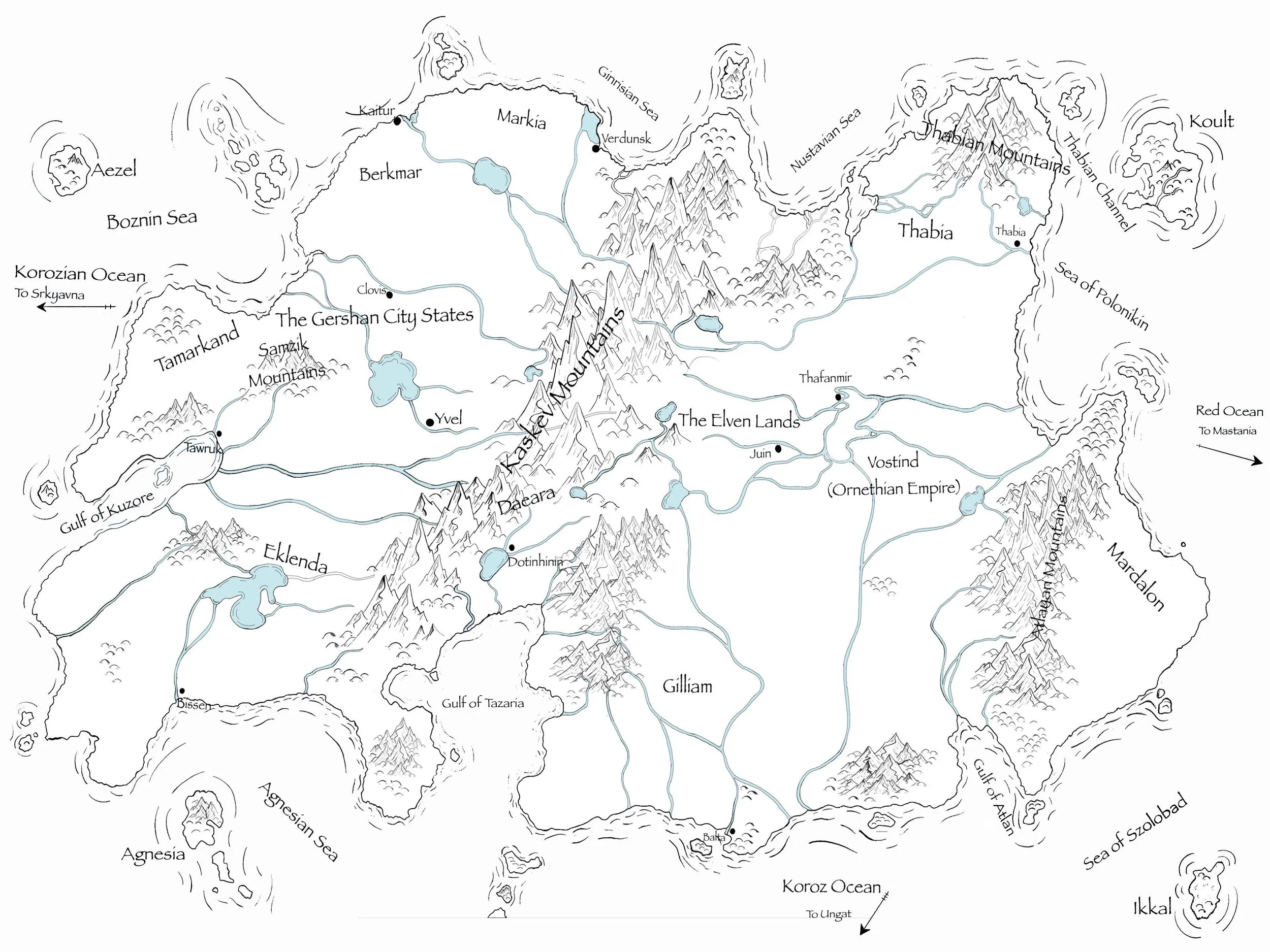
Get:
Get the newsletter
Progress update for ongoing work
Exclusive content
Notices of Advance Review Copy (ARC) reader opportunities (basically, you get to read/review a book before its release)
Posting of future appearances and events